
Why Is Everything 'Wrapped'?
On Spotify, WEIRDness and the endless search for ourselves

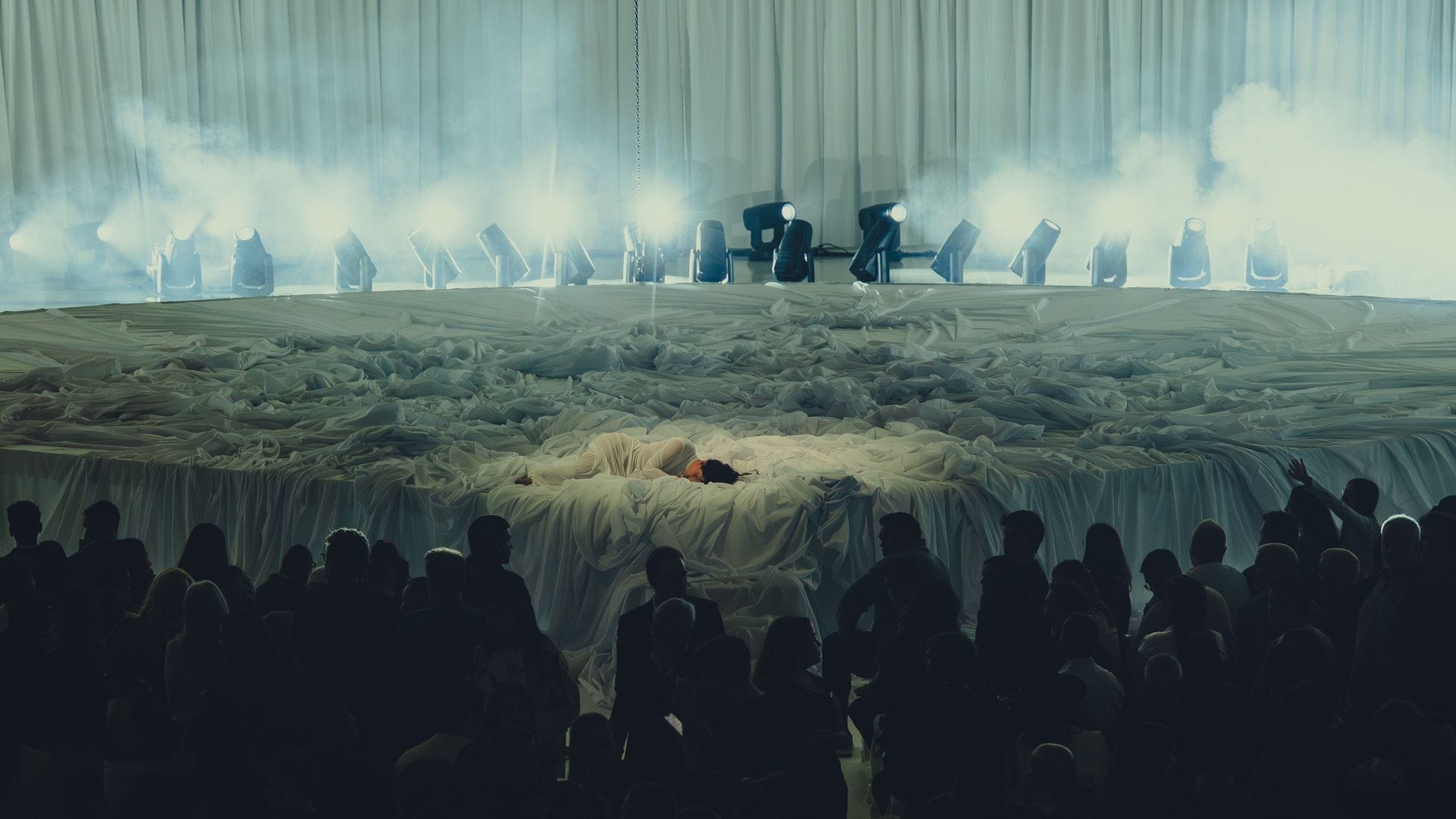
According to Youber — Uber’s knockoff of Spotify Wrapped — my rideshare archetype is the ‘Go-Go.’ Here is a picture of the Go-Go.1
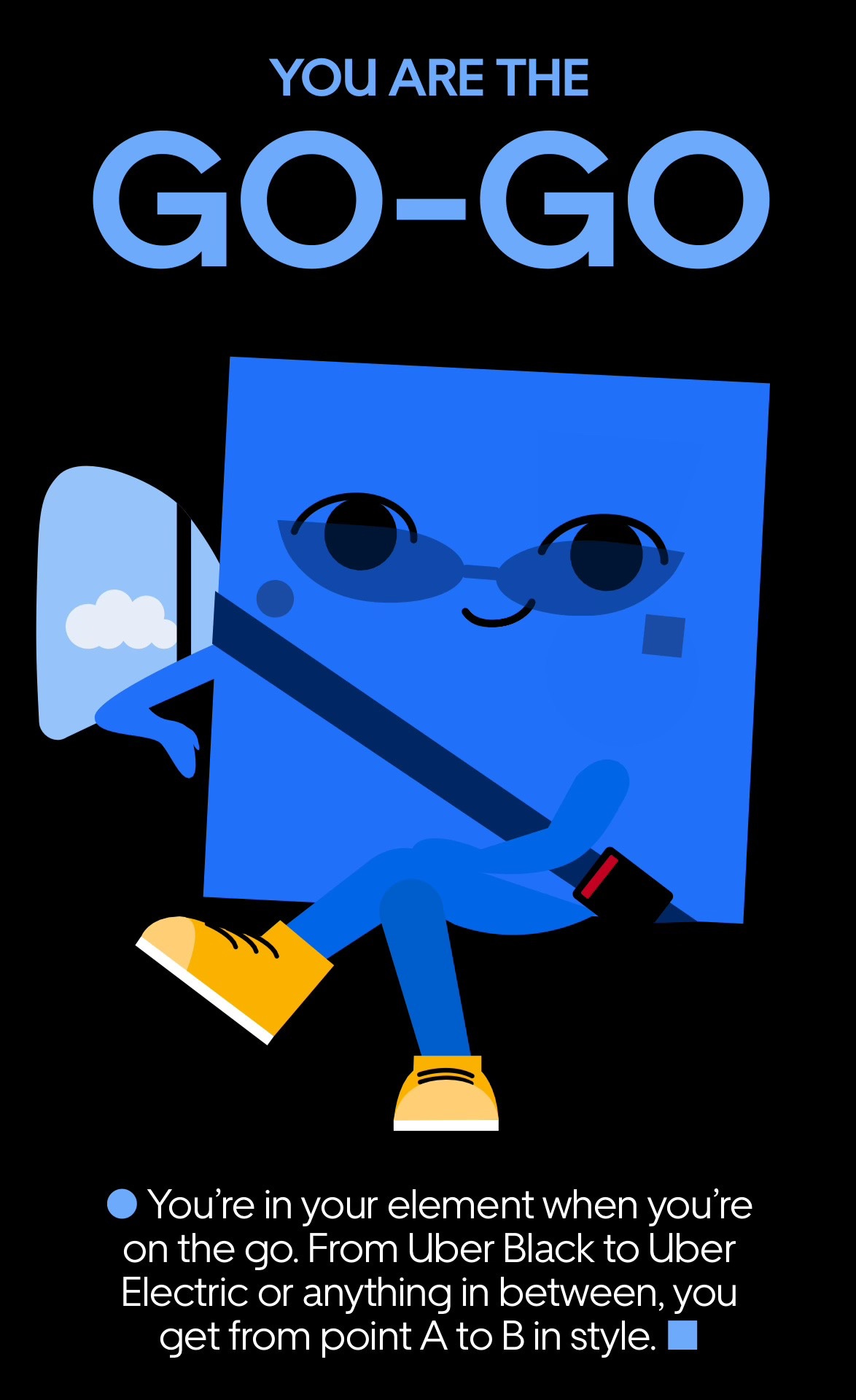
Do not be fooled by the title of the picture. I am the Go-Go. You are not the Go-Go. ‘No one moves like me,’ aside from the other 1,303,289 Uber users who were assigned to the category of Go-Go.
Spotify introduced its Wrapped feature in 2016: at the end of each calendar year, the app generates a summary of your top artists and genres and songs and, more recently, characterizations of your listening habits as archetypes, or locations on the globe, or whatever. It is absolutely magnetic. The social media director for McDonalds called it a “masterclass in fan advocacy.”
So naturally, every company copied Spotify, even those whose products do not lend themselves to an interesting year-in-review. Here’s an incomplete list for 2025: Uber, Goodreads, Duolingo, Reddit, Twitch, Youtube, Nike Run Club, Netflix, Reclaim, Hevy, Flow Master, Strava, Ryanair and Merriam Webster. I look forward to Meta’s eventual release of ‘Life Wrapped’ for owners of their Ray Ban AI Glasses.
Presumably, companies don’t introduce these features unless they’re pretty sure customers will enjoy it. It seems like they’re right, at least some of them: I am the kind of person who writes critical think-pieces about these matters, but when I saw the Wrapped button pop up on Spotify, I hit that thing like the cocaine lever in a Skinner box.
Why? What is so interesting to us about ourselves?
I’m Not Like the Other Boys
I’m going to give you an unfinished sentence, and you need to think of three ways to complete it. Ready? I am _____. Come up with three answers before reading the next paragraph.
I might say curious, kind, and a scientist. You probably live in an industrialized Western nation. So I bet you, like me, came up with a set of adjectives, career descriptors, or other phrases that capture your personal characteristics.
Fine, okay. But what does living in an industrialized Western nation have to do with your responses?
You might be familiar with the most famous acronym in social science: WEIRD. People use it to describe the core sociological traits of populations that live in Western, Educated, Industrialized, Rich and Democratic countries. These sociological traits encourage a suite of psychological traits that are otherwise both globally and historically rare. One of these features is heightened individualism — we WEIRDos are unusually self-obsessed.
The “I am ____” game provides a classic demonstration: people from WEIRD places tend to fill-in-the-blank with personal characteristics. But people from non-WEIRD places supply answers like “I am Benji’s brother” or “I am Wendy’s son.” They’re more likely to define themselves in terms of their relationships to other people.
Further support for this result comes from the associations between the wealth of a country and the values expressed by its citizenry. The figure below, drawn from the World Values Survey, captures this correlation. Economic development is clearly bound to ‘secular’ and ‘self-expressive’ values: religious freedom, economic liberty, the right to divorce and so on.
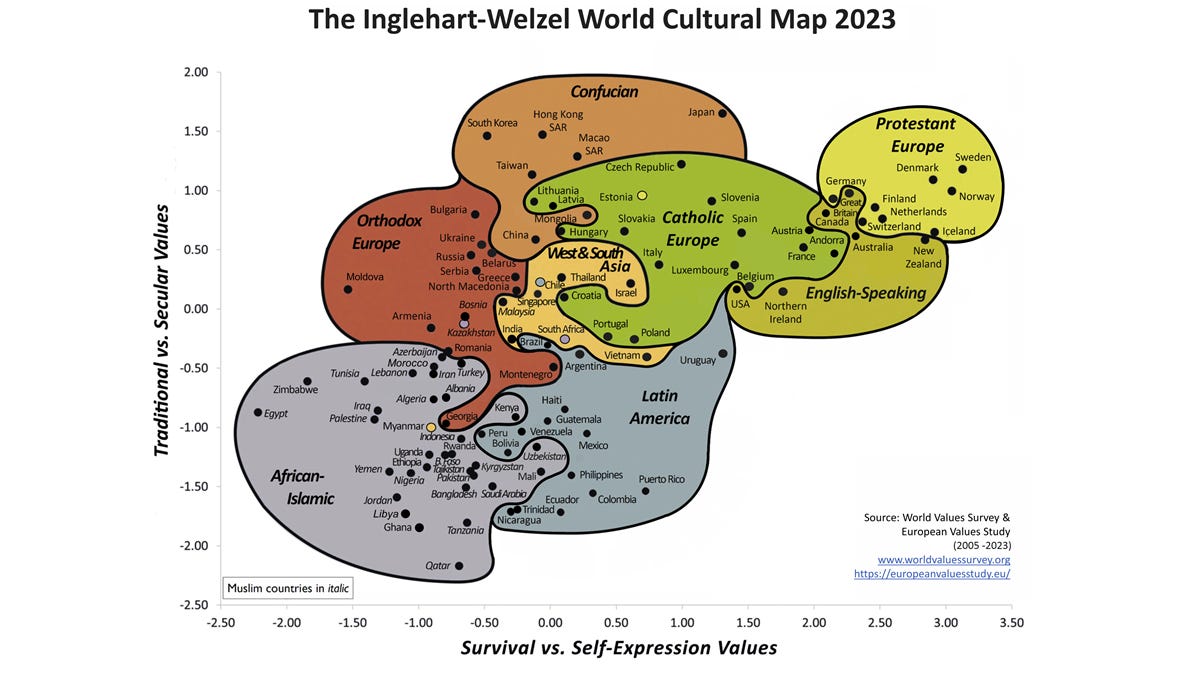
How do we explain these differences? If you want a full answer, I’d recommend a book called The WEIRDest People in the World, where Joe Henrich lays out a full theory of the origins of WEIRDness. But I can give you the Cliff Notes: individualism is very useful in societies where your subsistence depends on the ability to form associations with strangers.
Such is the economic structure of WEIRD nations. In these places, you must cultivate traits that make you, the singular entity that bears your name, desirable to economic and romantic partners. No one cares who your daddy is; they want to know who you are. Conformity makes you replaceable. If you’re just like everybody else, then tough luck — that means you’re nobody at all.
Autoerotic Individuation
So individuality is a means to various evolutionary ends. But something interesting has happened to that arrangement: individuality is also now an end in itself. Bear with me. I want to convince you that we now pursue uniqueness via roughly the same logic that leads us to masturbation.
Sex often produces babies, and evolution loves some good baby-making. So we’ve evolved to derive pleasure from sex, because we do pleasurable things more often. But as a result, we can also maximize the signal in ways that don’t lead to the useful outcome: for instance, through masturbation.
In WEIRD societies, similarly, a sense of uniqueness is a good signal that you’re doing something right. We must try to distinguish ourselves in the market, and we can use signals of our individuality to note whether we’re succeeding. But the pleasures associated with that signal can be hijacked. We can be tricked into chasing individuality for its own sake.
And that is exactly what has happened. Consider the only group of people that literally everyone hates: NPCs. This acronym stands for ‘non-player character.’ Traditionally, it refers to entities in video games that are not guided by the agency of the player. They repeat voice lines, walk in endless loops, and otherwise act in stereotyped ways that indicate their lack of autonomy.
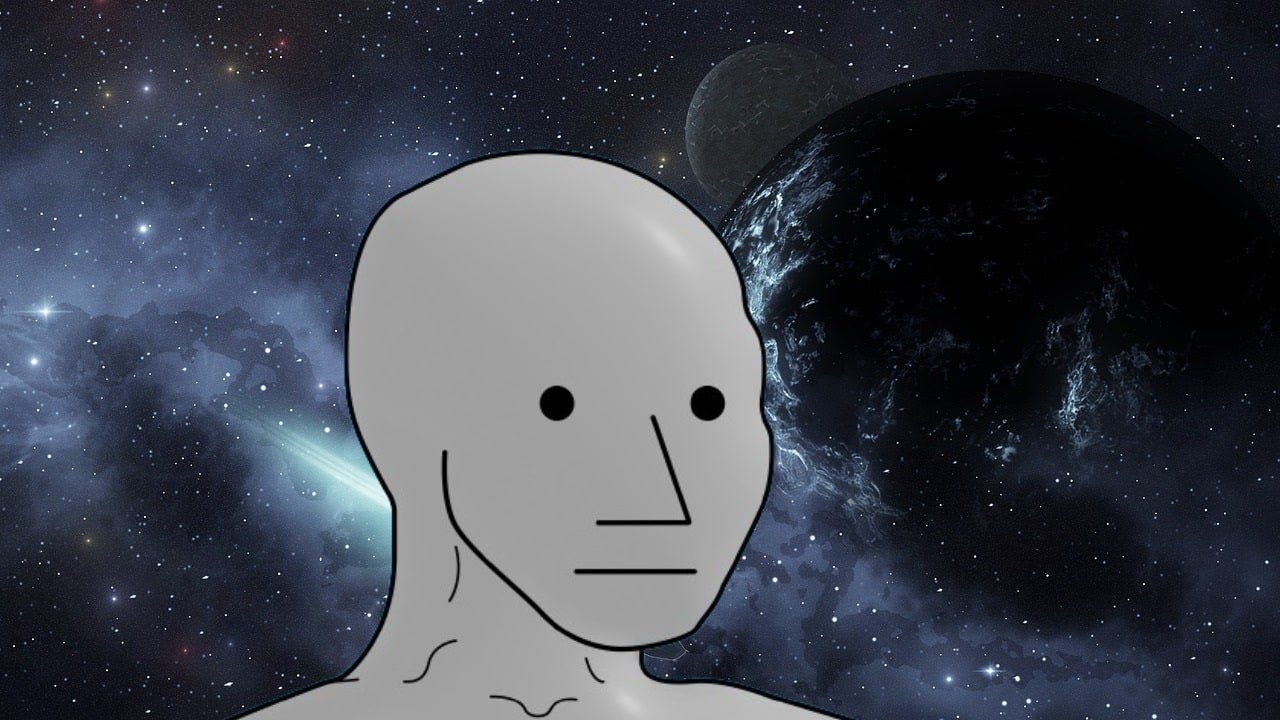
Now, the word has escaped gamer lingo and become a popular insult. We use it to disdain someone whose actions seem predictable based on some mental model, like a political stereotype. An NPC lacks individuality; they act like iterations of an archetype, rather than agents in and of themselves.
Despite our many divides, we all seem to agree that there is nothing worse than an NPC. People throw this insult from every political direction. Zoomers use it to insult Boomers, and Boomers would use it to insult Zoomers if they knew what it meant: when they criticize the youth for being brainwashed by TikTok, they basically mean the same thing. In 2023, three boys yelled ‘NPC’ at a man from across the street. The man chased the kids into a Dollar Tree, then stabbed and killed one of them with a five-inch knife.
But as much as we hate conformists, we equally love their opposites. We make quirky wallflowers the heroes and heroines in every modern coming-of-age movie. We treat strange sleeping habits and social awkwardness as signs of entrepreneurial genius. We adore and lust after celebrities like Robert Pattison, Timothee Chalamet, and Lakeith Stanfield in part because they act like freaks in their interviews.

And that’s without mentioning all the ways we fetishize our personal sense of uniqueness. Personality tests, mental health self-diagnoses, the development of ‘personal aesthetics,’ the learned sycophancy of ChatGPT and the vast glut of self-help literature can all be understood as super-stimuli for our individualistic instincts. Individuality is our kink, and we just can’t stop gooning.
Happy Angels, Happy Ants
Thus Wrapped is born. Cocaine lever, corn syrup: a Fleshlight to sate our limitless lust for singularity. Spotify Wrapped says “Taste like yours can’t be defined.” Youber says “No one moves like you.” They know exactly what their customers want.
And the customers want it— they really, really do. This year, Spotify provided customers with a “Listener Age.” Mine was 22, which seems embarrassingly ordinary. I keep justifying the result to people by saying that I play too much pop music at the gym: if only Wrapped knew the real me! Then my interlocutors tell me that their results were also wrong, because they play too much lo-fi while studying. We bask together in the glow of our shared need for eccentricity. What else is a WEIRDo to do?
But ironically, the release of Wrapped can also encourage the opposite conclusion: that we are not special at all. Everybody I know posts their top songs on Instagram, sends me a screenshot of their most listened-to album, and comes up with the same shitty explanation for why they listened to so much Drake. And I do it too; I just can’t help myself. Observing and riding this wave of excitement, I find myself feeling less and less like an individual, and more and more like an NPC.
Which is, of course, the truth. The social strictures of WEIRDness demand individuality, but our evolved psychology wants no part of it — though we are told to distinguish ourselves from the crowd, we cannot stop ourselves from surrendering to its motions. We are 10% angel and 90% ant, impossibly reaching toward divinity.

Wrapped understands this fact; it knows that alongside our cultural desire for uniqueness, a deeper part of us wants to ensure the contours of our conformity. Spotify assigns me an archetype, then tells me about the other 100 million users who fell into the same camp. “All your listening,” it says, “made you part of something bigger.” In 2023, I and every other young leftist on Earth were categorized into the listenership of Burlington, Vermont. There was something lovely about that. I felt my entire generation alongside me, soundtracking our confusion to Big Thief.
Every December, we rush to Wrapped to trace the shape of our solitary journeys. Then we find that all the searching has led us right back to each other. Ants transcend themselves in their masses; angels kneel together before God. Like our species, the power of Wrapped is two-fold, Janus-faced, dialectic: a singularity formed from the division, culture and cognition, that lines our human hearts.
So, to the other 1,303,289 Go-Gos out there — it was a pleasure to have Gone-Gone with you this year.
Many thanks to Lindsey Cannon, Steve Elster, Tracy Pan and Wendy Stark for reviewing and commenting on earlier drafts of this essay.
An insightful article on WEIRDness— well done!
Was thinking this exact question recently when the NYT Games did a wrapped to tell me I liked the Wordle.