

A few months ago, the New Yorker’s Louisa Thomas published an article about the “Protection of Women and Girls in Sports Act,” a House bill vowing to pull funding from schools that allow trans girls to play for girls’ sports teams. You might not have heard, but several bald podcasting gorillas have spent lots of time in the last few years yelling about this “problem.” Their political counterparts spent just as much time vowing to solve it, which means that people in my life who support those politicians think it’s important, or interesting, or maybe just funny to discuss trans athletes with me ad nauseaum.
I could not be less interested in rehashing those debates. Instead, I want to set aside the dead horse named “BuT iS iT fAiR?!” and think about the very well-substantiated thrust of Thomas’ article — the issue of trans athletes is pretty much imaginary. Of the 170,000 high-school athletes in Michigan, two are transgender girls. Ohio’s House of Representatives passed a bill banning trans participation in girls’ sports, even for kindergarteners; a journalist later found that there was exactly one trans varsity athlete in the entire state. The NCAA contains 520,000 athletes. Charlie Baker, the President of the organization, testified before Congress that he was aware of less than ten who qualified as trans.
Read the article for more crazy facts, but you get the point. Without even considering the fact that we’re just talking about participation here — it’s not like Congress is preventing an inevitable string of murders by banning trans girls from sports — this problem, statistically, is bullshit. Some of the most powerful figures in the United States are investing lots of time, money, and labor into combatting an issue that barely exists in the first place. And our electorate seems to think that’s just fine. Why do so many people care so much about an issue that is so fundamentally meaningless?
The Taste of Political Cheesecake
Instinctively, we might want to compare the trans athlete panic — I’ll call it the “TAP” for short — with Pizzagate or other genuinely imaginary problems. But there’s an important difference between TAP and something like Pizzagate. The basis of TAP is not literally imaginary; there are trans girls in sports, few though they may be, and occasionally one of them is good enough at their sport to warrant discussions of their inclusion. Unlike Pizzagate, TAP does not depend on outright lies. When right-wing organizations like The Daily Wire write their reports, they’re exaggerating stories about actual athletes and the people who play against them, not spinning wholesale falsehoods.1
Obviously, there are more important issues in student athletics that raise much less concern. Consider a 2022 paper by researchers at Duke, which noted that 33% of student-athletes experience serious mental health problems during college. Only 10% of that group seeks out professional help. Roughly 156,000 athletes, therefore, deal with depression, anxiety, eating disorders and other issues without psychiatric support. That’s a huge problem. But nobody wants to talk about it at Christmas, and Joe Rogan is much less interested in rambling about it on his podcast, and you certainly won’t hear any Senators spewing about it on the campaign trail.
So TAP is technically based in reality, but the intense response is clearly unfounded — why would anyone care more about student-athletes when they’re competing against an occasional trans peer than when they’re struggling with anorexia?2 Superficially, we could blame it on biased reportage, especially from conservative outlets. That’s an important element, which I’ll return to at the end. But it just regresses the question: why do those outlets prioritize these stories over others?
The psychologist Steven Pinker once theorized that music is “auditory cheesecake . . . an exquisite confection crafted to tickle the sensitive spots of our mental faculties.” My view on TAP is similar. Stories about trans girls in girls sports are political cheesecakes. They trigger an unbelievably potent hysteria in human minds. Why? Because it tickles a special emotion, one that has generated innumerable trumped-up crises, panics, and fears throughout human history: disgust.
Some People Are Full of Invisible Bugs
Describing the actual smell of expired milk is very hard. Most authors resort to describing our response to the smell. The sour odor is “repulsive,” “nauseating,” and so on. More specifically, it compels us to recoil, scrunch our face, grunt and possibly gag. This set of actions is mostly invariant across cultures. The items that trigger them vary cross-culturally. Lots of cultures eat bugs — but you, a coward, probably wouldn’t want a cup of crickets to snack on right now.
Still, almost nobody feels the warm fuzzies around rotten food, infected wounds, or the smell of old feces. Disgust makes it hard, if not impossible, to ingest or spend much time around those items. That’s helpful, since all three could make you sick.
However, disgust also structures our assessments of people — not just lepers, mind you, but people who seem to defy social or moral norms. Both children and adults use expressions like “revolting” and “gross” to describe immoral actions like adultery or stealing from the poor. But the feeling also extends to mere signs of social difference. If someone is more sensitive to disgusting smells, they’re more likely to condemn gay couples for kissing in public, and releasing those smells in a room makes people like gay men less. Interracial couples trigger a greater sense of disgust than same-race couples. Unsurprisingly, disgust also predicts support for trans-inclusive bathroom policies.
That’s rather odd, when you think about it for a second. If you’re a racist, fine: you might not like interracial couples. But dislike and disgust are different. How have our brains come to weave the two emotions together? Why do we react to non-normative people as if they’re full of invisible bugs?
My Mommy and/or Tummy Says I Shouldn’t Play With You
One theory holds that disgust has been evolutionarily leveraged to steer us away from anything we’re told (whether by biology or culture) to avoid. Disgust is clearly a compelling way to stop us from engaging in undesirable behaviors — try your damndest to eat a rotten apple. So extending it to moral norms is an adaptive way to ensure conformity.
But as we know all too well, moral norms aren’t always correct. Stealing is bad, being trans is not bad; yet both are socially policed, and social policing weaves disgust into moral cognition. That makes it hard to tell if we’re recoiling from a behavior because it is fundamentally repulsive, or simply because we’ve been conditioned to view it that way.3 All we know is that we don’t like the twisty feeling in our stomachs.
For our purposes, we can remain agnostic about the neurological mechanisms and evolutionary story behind the emergence of moral disgust.4 The key points are (A) that disgust is reflexive and powerful, and (B) easily applied to social domains. When people encounter triggers in their environment, biological or otherwise, they feel sick, and the feeling is difficult to shake.
Unfortunately, that means we’re likely to feel repulsed by individuals who defy our sense of social acceptability. Exposure to those folks — interacting with them like human beings, that is — probably reduces the feeling over time. But disgust will also make those interactions less desirable. Ironically, the people who most need to get over their moral disgust are the least likely to do things that would help them get past their repulsion.
My Mommy and/or Tummy Says You Probably Have Ebola
However, the problem of moral disgust is deeper than pure repulsion. It’s about how we extend the conceptual nature of disgusting items to people. Disgust probably evolved to help us avoid items and behaviors that could make us sick, including signs of contagious disease. Researchers have shown that disgust sensitivity predicts our ability to avoid pathogens in a contaminated environment. That means we probably understand disgust as a sensory signal of contagion — of something that could spread and infect ourselves or our loved ones, if we aren’t careful.
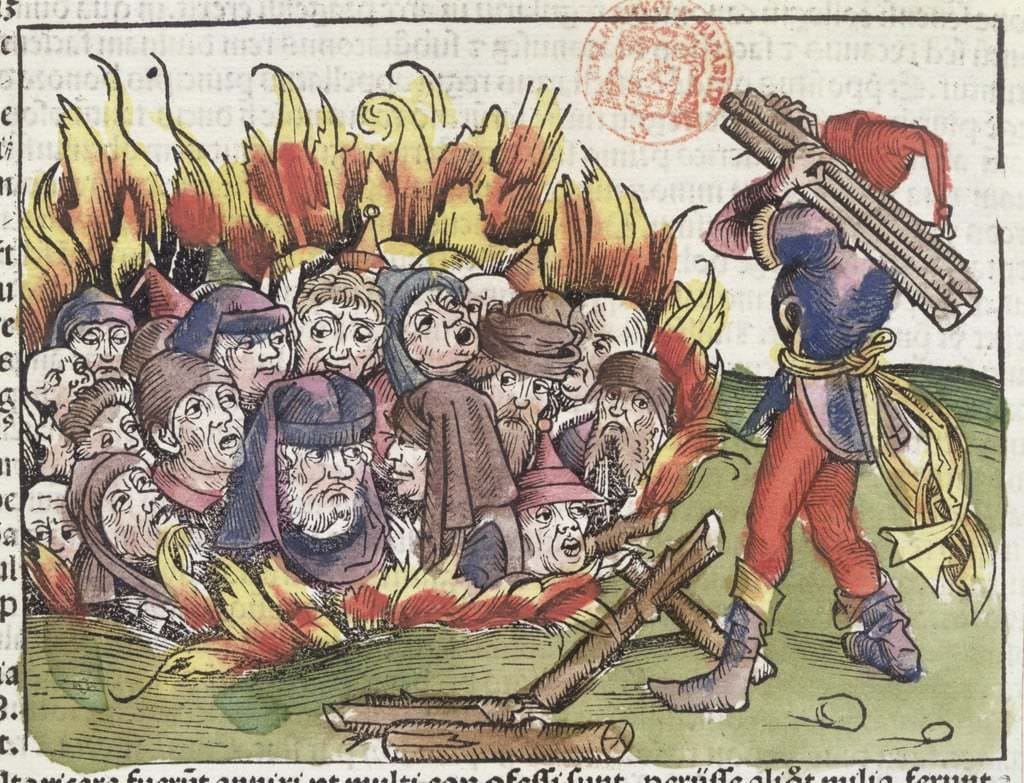
You might see where this is going. During the AIDS crisis, gay men were treated as literal nodes of disease; Jews were accused of poisoning wells and spreading the bubonic plague; anti-miscegenation laws assumed that racial mixing would contaminate the purity of the white race. Nowadays, trans people are regularly identified as vectors of “social contagion.”5 Moral disgust toward non-normative social behaviors is regularly tinged by a sense that some moral disease — or actual illness — is spreading. Since disgust is fundamentally a signal that something, or someone, is contagious, we’re inclined to think that anything disgusting will soon spread beyond its bounds.
In light of moral disgust, the disproportionate reaction to trans girls in girls sports makes a lot more sense. When presented with stories about strange people existing in spaces where they ostensibly don’t belong, large swaths of the public react as if they’re hearing about a new case of Ebola in the United States. Sure, it’s just one case, they say . . . for now. But definitionally, diseases spread. If we don’t take action, who knows how far this thing will go?
With that mental model, people are sure to vastly overestimate the scope of the issue. And even for those who know better — i.e. the Senators who were told directly, by the head of the NCAA, that .002% of student-athletes were trans girls — their sense of moral disgust leads them to believe that the scope could increase exponentially, just like an actual sickness.
Ben Shapiro is a Telepath
Crucially, TAP is not entirely the fault of an uninformed and potently biased public. Their hysteria would not exist if conservative media outlets and politicians had not cannily chosen to use trans athletes as a political whipping post.
To be clear, most of the relevant figures — Tucker Carlson, Ben Shapiro, and Charlie Kirk, to name a few6 — are probably not faking their distaste. But they are clearly hyper aware that stories about trans athletes can gain them much more attention and political leverage than, say, stories about mental health in the NCAA. Do Shapiro et al. actually think trans athletes threaten the stability of our country? I don’t think so. Undoubtedly, though, he and the others correctly believe that they can milk money, attention, and power from the issue.
And just as a baker looking for repeat customers will add extra sugar to their cheesecake, the right-leaning reportage on trans athletes actively works to trigger a sense of moral disgust in consumers. In her Masters thesis, Hannah Martian noted five stories in the New York Post written “explicitly about [Lia] Thomas’ genitalia,” and their repeated framing of Thomas as a threat not only to women’s sports, but to the physical safety of other women. From February 3rd to 4th of this year, the Daily Wire published three separate TAP stories, all of which mentioned Lia Thomas and tied in quotes about other salient topics, like “sexual content in kindergarten” and “standing up . . . for women’s spaces.”
It is not surprising that we’ve arrived in this funhouse world, given what science has revealed about the sheer power of revulsion, the existence of conservative moguls savvy enough to exploit it, and the power of our new information ecosystem to let those moguls drip-feed unfiltered nonsense directly into our heads. Sex sells. So does disgust. TAP, like so many moral panics before it, has successfully leveraged both.
Meanwhile, Lia Thomas has not raced in the NCAA since March 2022. As of January 2024, she was one of two D1 trans athletes to have ever won a national championship, out of the ~39 trans athletes (of any gender) that have competed in the history of collegiate sports.
My mom teaches middle school in a neighborhood constituted mostly by Central and South American immigrants. Next time I visit home, I expect certain people to tell me all about the aforementioned anti-trans bill. Perhaps I’ll inform them that ICE swept through our city in February — of course, they wouldn’t have known — and that the following Monday, ¾ of my mom’s students didn’t show up for school.
Of course, their phrasing is often misleading. Articles about Imane Khelif include headlines like “Boxer Who Failed Gender Tests Wins Gold In Women’s Boxing Without Dropping Single Round Entire Olympic Run.” Khelif is not trans, and the so-called “gender tests” were administered by the now-banned IBA under extremely murky circumstances. The Daily Wire isn’t lying — but they are purposefully leaving out the important context.
Or, the more obvious comparison — why are suicide rates among trans people a smaller concern than their participation at swim meets?
Might it be that even basic disgust — i.e. revulsion toward rotten food — is acculturated? Probably not. Newborns make disgusted facial expressions when exposed to bitter tastes, and non-human primates avoid feces and rotten food.
Quick sidebar: I sometimes find these kinds of theories tenuous, because they sound too much like early ideas about the nature of life. Several scientists in the 18th and 19th centuries suggested that living matter, unlike non-living matter, possessed an elan vital: a living force. Clearly, identifying this supposed force without explaining how, exactly, it generates life was not a very useful move. Evolution, in some cases, feels like a modern elan vital. In the case of moral disgust, I consider it a very basic starting point for most of the more important and specific questions. For instance: is moral disgust rooted in our biology, like physical disgust, or is it a byproduct of acculturation processes that leverage our more basic capacity for revulsion?
Recently, the psychologist Jonathan Haidt further publicized this theory in his new bestselling book about smartphone use in adolescents. He argues that some adolescents, especially clusters of girls, begin exhibiting gender dysphoria only after seeing their peers (online or otherwise) express dysphoric behaviors. Full disclosure — I didn’t think, prima facie, that this was an implausible idea. But there is zero evidence behind the theory. The core survey behind it only surveyed parents from explicitly anti-trans websites. Biased sample, anyone?
Some liberals have also capitalized on the panic. Last year, Bill Maher hosted Riley Gaines on his god-awful podcast to discuss — who else — Lia Thomas? Bill Maher also recently greened out while interviewing the Hawk Tuah Girl and told her she should make an OnlyFans. That isn’t relevant, but I hate Bill Maher and thought it was funny.
This makes me wonder how many members of Congress have strong opinions on WNBA but couldn’t name a WNBA player